Fire Extinguisher Icons: A Designer's Hands-On Review
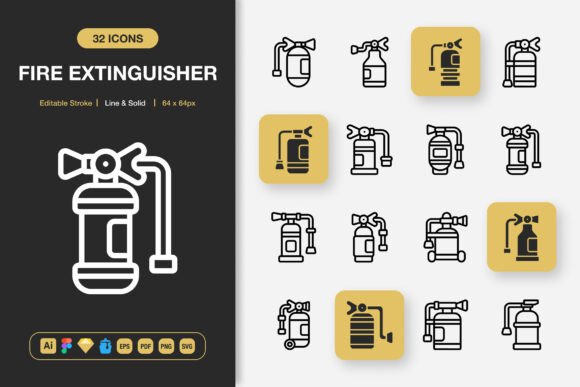
When a new embroidery design lands on my screen, my first question is never about its specs. It’s about its soul. What mood does it carry? What story could it stitch onto fabric? Opening the Fire Extinguisher Icons set, my immediate impression was one of clean, confident utility. These aren’t decorative flourishes; they are communicative symbols. The minimalist approach gives them a sharp, no-nonsense personality that feels both professional and approachable. For an embroidery designer, that’s a promising starting point. It tells me this design isn’t trying to be everything to everyone—it knows its job.
The Natural Habitat for a Safety Icon
So where does a design like this naturally belong? I pictured it immediately on a custom tote bag for a local fire station’s fundraiser, or embroidered neatly onto the sleeve of a workshop apron. The theme is inherently practical, which guides its application. This isn’t a design for a whimsical baby blanket, but it could be perfect for a personalized gift for a new homeowner, a safety-conscious chef, or as part of a branded uniform for a small business in the industrial or culinary space. The icons carry a sense of authority and care, which translates well into products where trust and function are key.
Stitching It Into Reality: A Tote Bag Scenario
Let’s walk through a real-life use case. Imagine you’re an Etsy seller preparing a batch of custom embroidered tote bags for a community safety event. You choose one of the Fire Extinguisher Icons. In your mind, you see it stitched onto the front panel, perhaps in a bold red thread against a natural canvas bag. The minimalist detail level is a major advantage here. On a textured fabric like canvas, overly intricate designs can get lost or appear muddy. This icon’s clean lines and open shapes promise good stitching clarity. There are no tiny, dense corners that might puff up with too much fill stitch, and the overall shape is sturdy enough to hold its identity even when simplified by the embroidery process.
Where Performance Meets Fabric
In practical embroidery project situations, a design’s true character emerges. On a smooth cotton tote bag or a sturdy apron, these icons would likely stitch out with crisp definition. However, this is where a professional’s caution comes in. On stretchy fabric like a sweatshirt or a thin, lightweight tee, the same file might require more attention. You’d need a good stabilizer to prevent puckering, especially if the design uses areas of solid satin stitch. Similarly, on dark fabric, the choice of thread colors becomes critical. A white or bright red thread would pop, but you must consider whether the icon’s minimalist form retains its recognizability in a high-contrast, monochrome version. Always test the design on scrap fabric first, in both light and dark backgrounds, to see how the stitch density behaves.
One of the trickiest surfaces for any embroidery is the curved crown of a cap. While these icons are geometrically sound, their success on a cap would depend heavily on the chosen hoop size and your machine’s ability to handle the curve without distorting the iconic shape. It’s possible, but it’s a scenario where I’d advise extra diligence in the test stitch.
The Business of Stitching: Value and Perception
Beyond the technical, how does this design affect the finished product’s appeal and value? For a craft business or small shop product, using a clear, well-executed icon like this enhances professionalism. It doesn’t look homemade in a haphazard way; it looks intentionally crafted. For a customer, that builds customer trust. They see a product that communicates its message cleanly—whether that message is about safety, preparedness, or professional affiliation. As a personalized gift, it feels thoughtful and specific, not generic. This boosts its giftability for the right recipient.
In commercial contexts, like a embroidered patch for a company uniform or a kitchen towel in a boutique restaurant, the design supports brand consistency. It’s a visual asset that can be repeated across different custom apparel items without losing its core identity. For digital product sellers offering printable mockups or using the icons in digital embroidery file previews, the clean lines make for a sharp, attractive presentation that engages potential buyers.
Designer Notes for a Smooth Stitch
Before you commit this design to a final hoop, here’s my checklist from the reviewer’s seat. First, check thread color contrast. Play with combinations. Maybe a metallic silver thread on a dark apron for a modern look. Second, inspect small details. Even minimalist icons can have fine points or corners. Ensure your machine and chosen hoop size can render them cleanly without jumps or thread breaks. Third, consider the end use. Is this for a baby embroidery item on a delicate fabric? Probably not. Is it for a holiday embroidery gift like a festive apron? Much more likely.
Always use proper stabilizer suited to your fabric. For projects needing frequent washing, like tea towels or workwear, test the stitched sample’s durability after a wash cycle to ensure the design holds up. Crucially, confirm licensing before selling finished items. The product description states it’s suitable for any project, but as a professional, you must verify whether that covers commercial resale of your handmade products. Don’t assume.
A Final Impression: Clear, Useful, and Ready to Work
Walking away from this review, my overall feeling about the Fire Extinguisher Icons is positive. They are design assets with a clear purpose. Their strength is in their straightforward, communicative nature. They won’t add decorative flourish to a pillow cover, but they will add meaning and function to a product that benefits from a safety or preparedness theme. For the embroidery designer, the small business owner, or the creative entrepreneur looking for a design that stitches cleanly and communicates clearly, this set offers a solid, practical foundation. It reminds you that good embroidery isn’t just about beauty; it’s about making an idea tangible, thread by thread.